Vikeur
A quantitative system for analyzing, testing and automating crypto trading strategies.
2025 – 2026
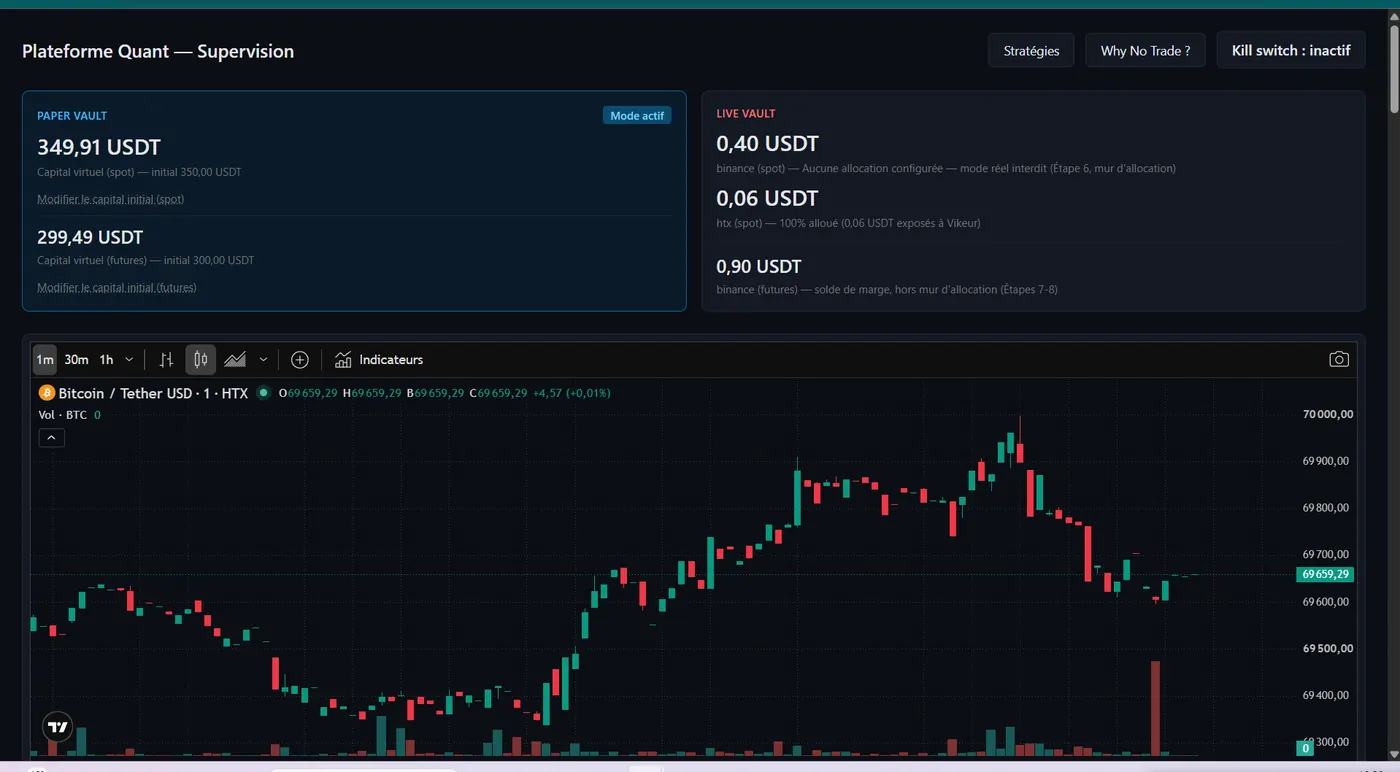
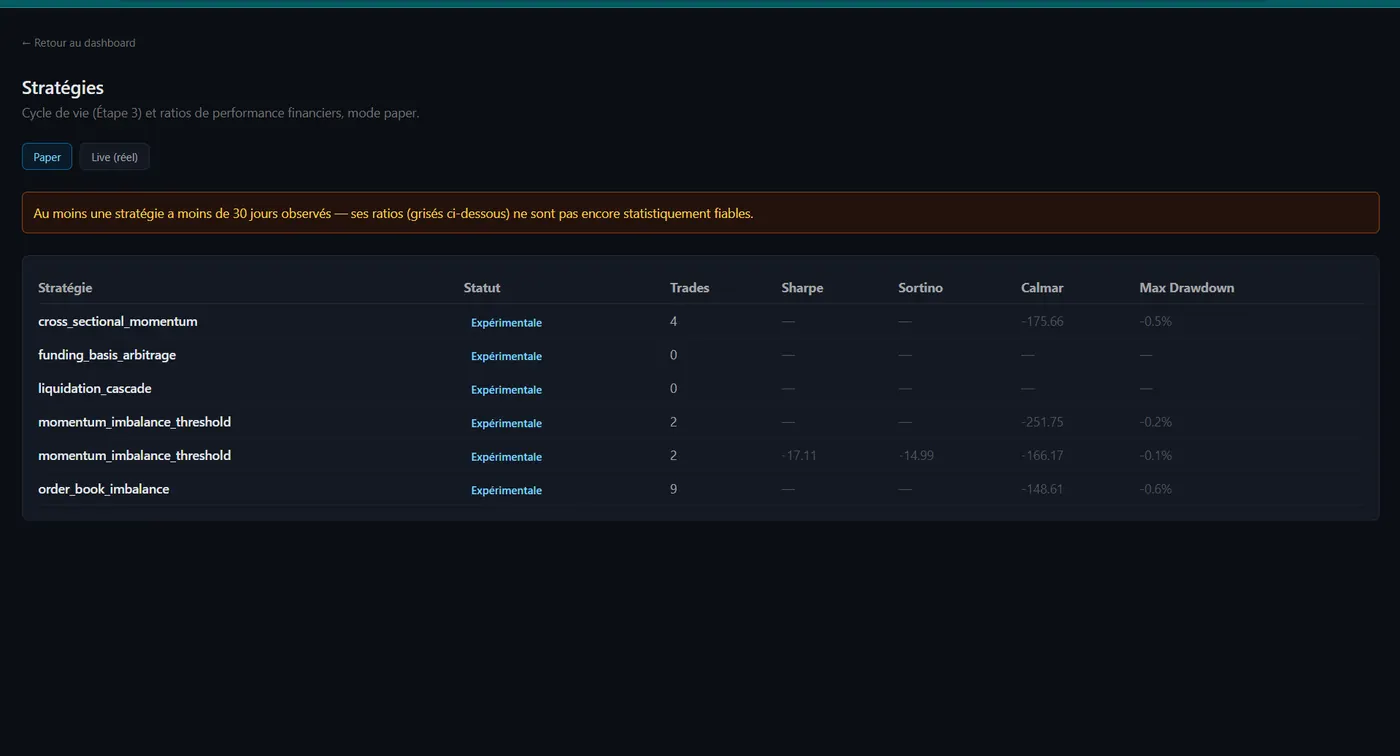
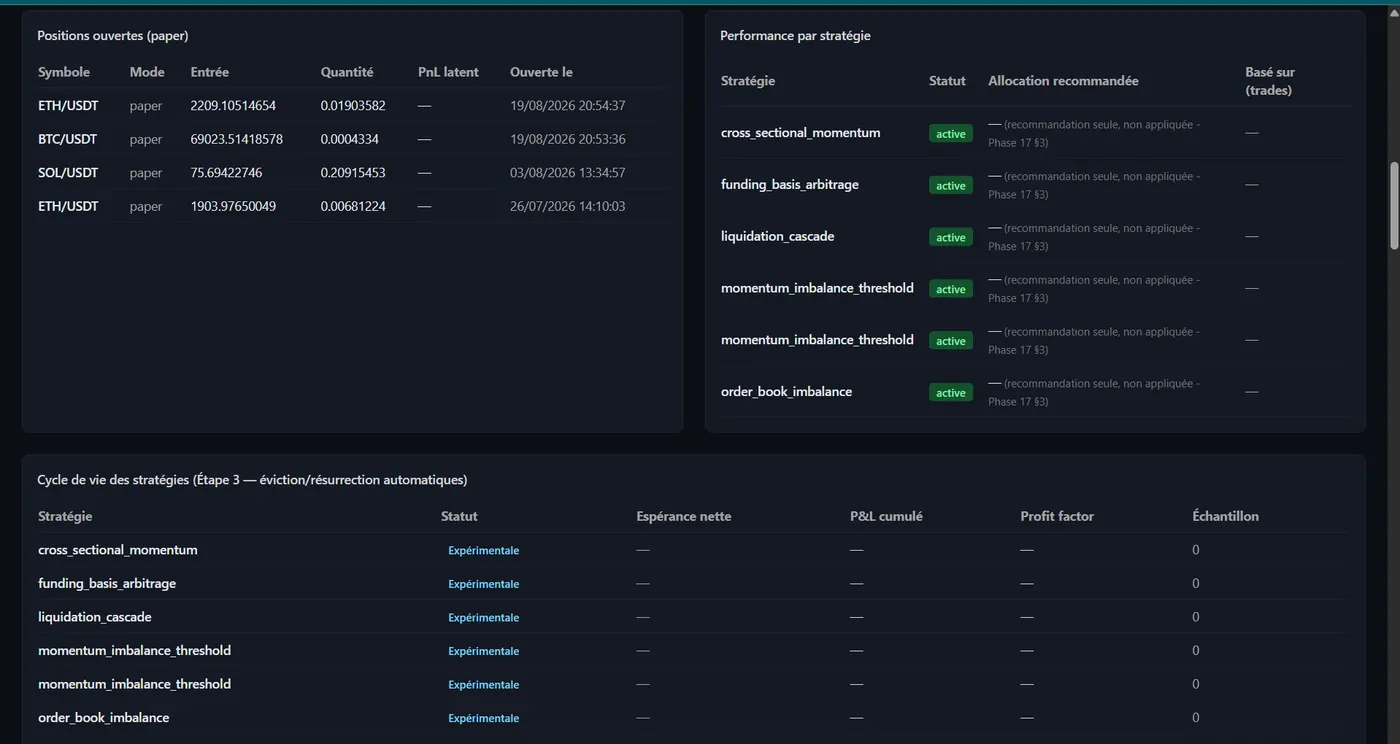
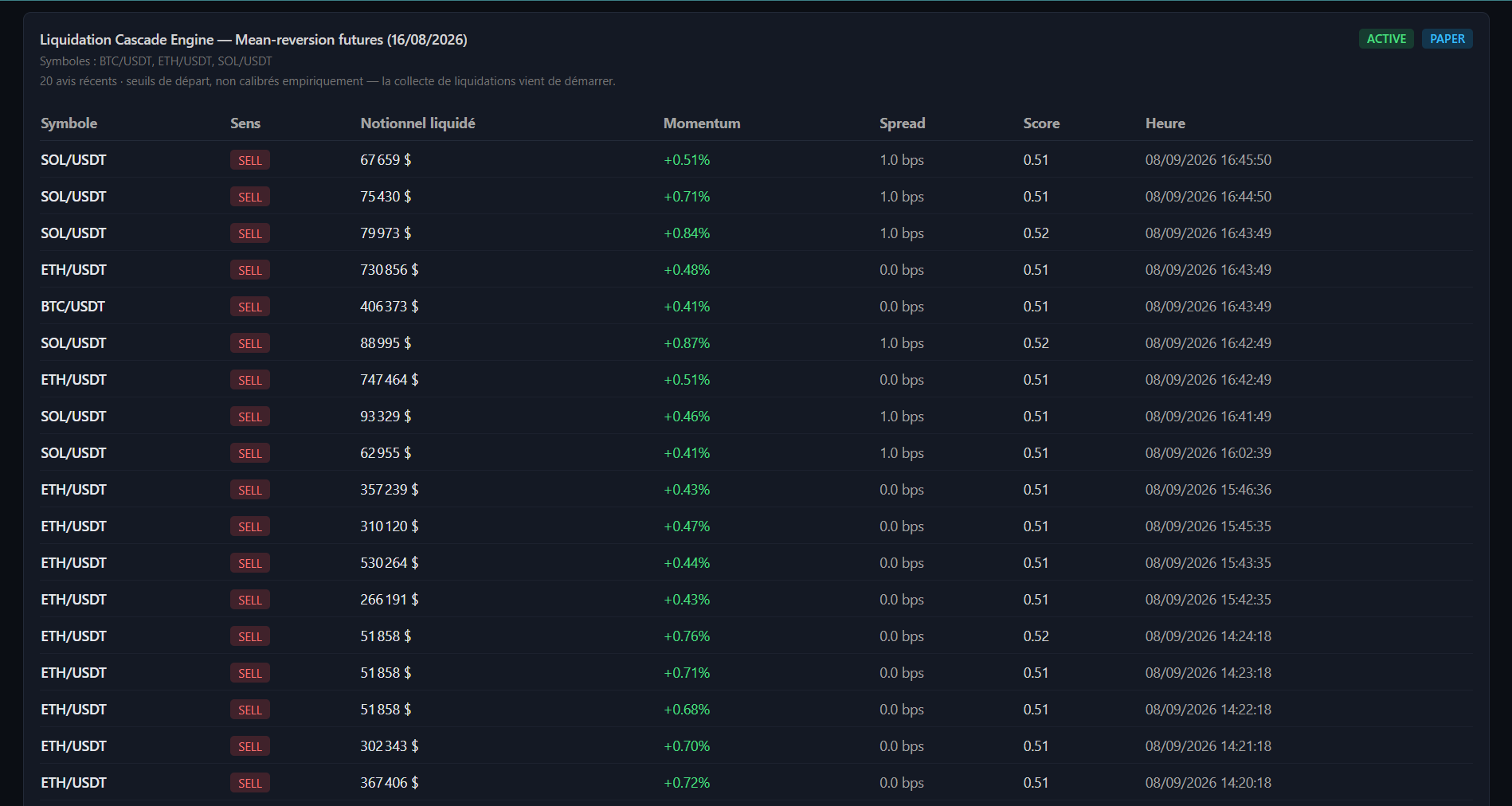
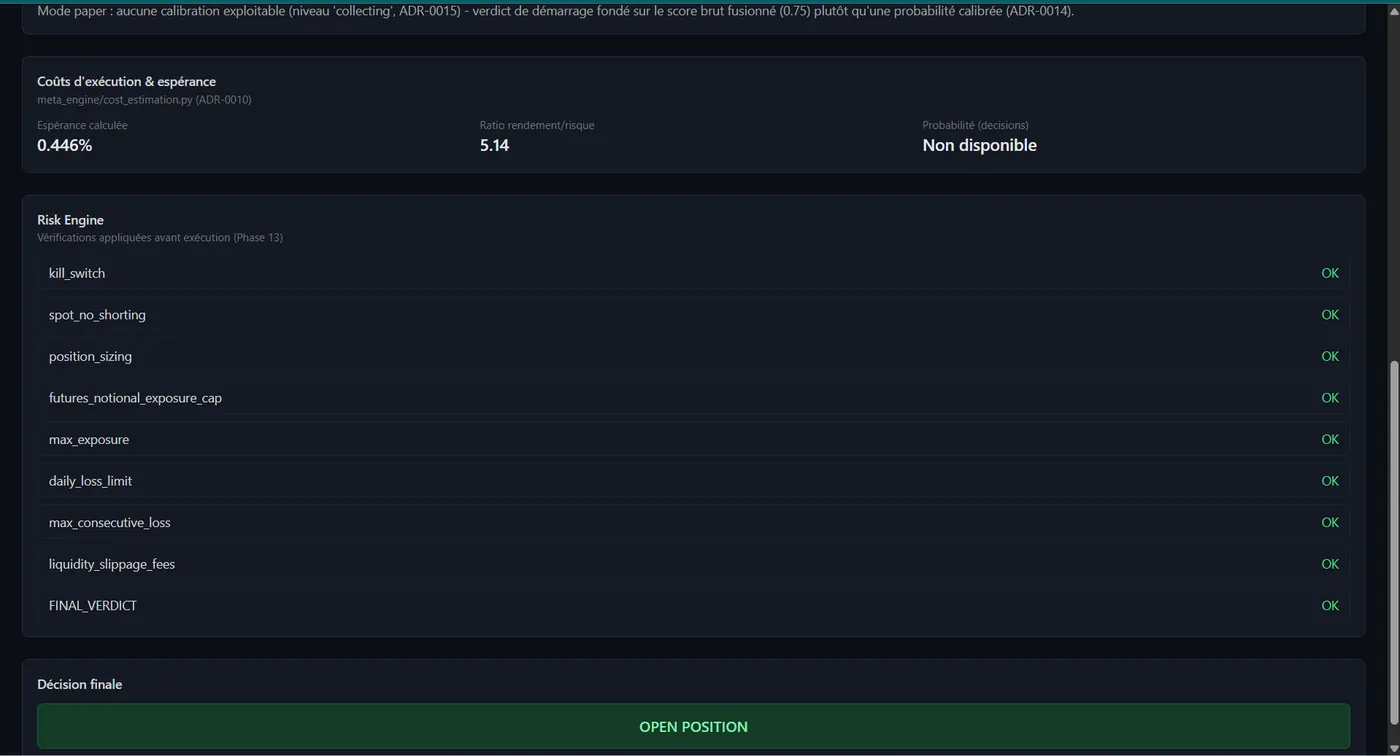
Vikeur is a system I built to study and test automated crypto trading. It collects real-time market data, generates signals from multiple decision engines, and can execute them in simulated or controlled live mode.
Automated trading requires being able to distinguish a bad decision from a technical failure. I wanted to build a system that could trace every stage of the process, explain its decisions, and strictly control what is allowed to be executed.
I built a Python and FastAPI backend that collects market data from HTX and Binance, feeds several independent decision engines, and combines their outputs through a calibration step. Every decision then passes through a dedicated risk engine before execution.
I designed and built the entire system: the data pipeline, decision engines, risk engine, strategy lifecycle, dashboard, and deployment.
- Real-time market data from HTX and Binance, spot and futures
- Multiple independent decision engines combined through probabilistic calibration
- Risk engine applied to every decision before execution
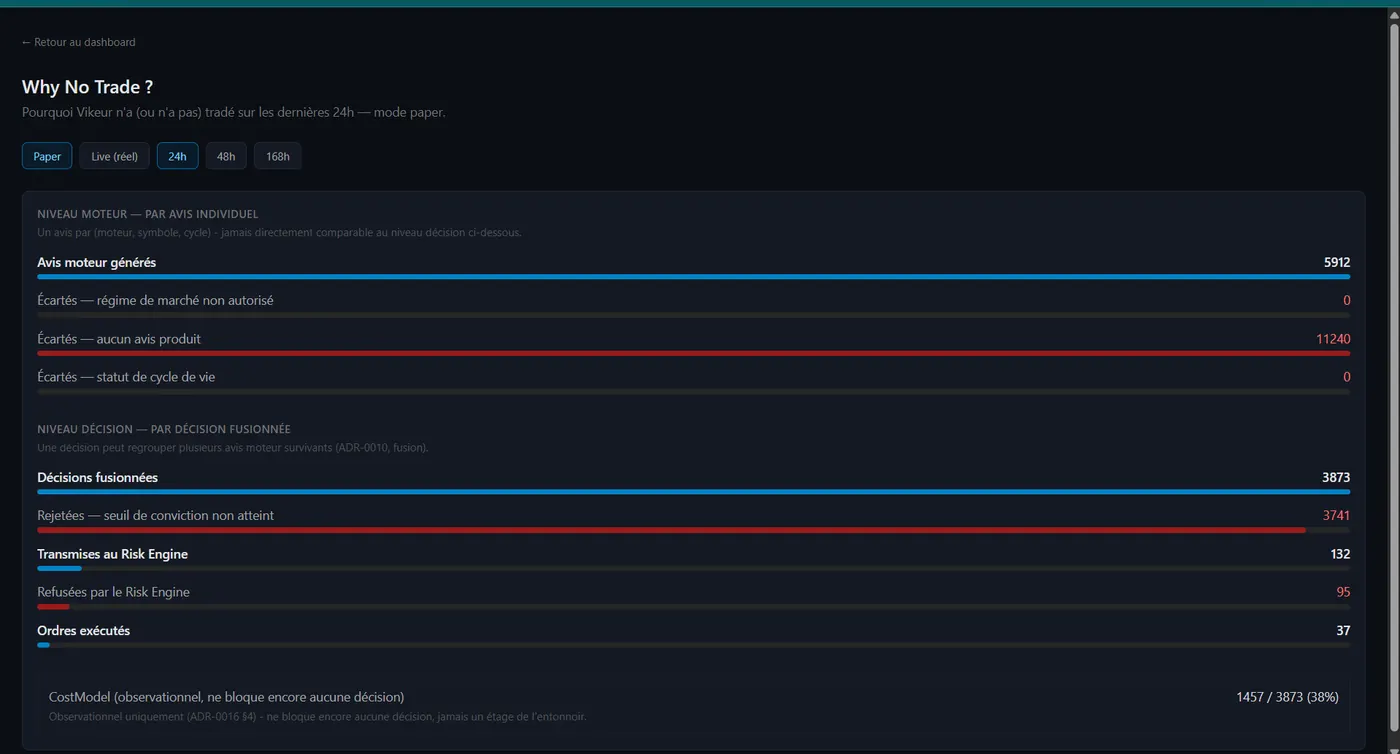
- "Why No Trade?" view explaining why a decision was rejected
- Strategy dashboard with performance metrics
- Dashboard for monitoring positions, strategies and system state
I built the system incrementally: data, decisions, risk, then execution. Each component was tested independently before being integrated with the next one.
The system is functional and currently runs in paper-trading mode. It is not yet used with real funds: the strategies being tested are still experimental or not consistently profitable enough. Paper trading allows me to continue evaluating them without exposing capital.