Binance Signals Platform
A real-time trading signal platform with market analysis, risk management and multiple execution modes.
2025 – 2026
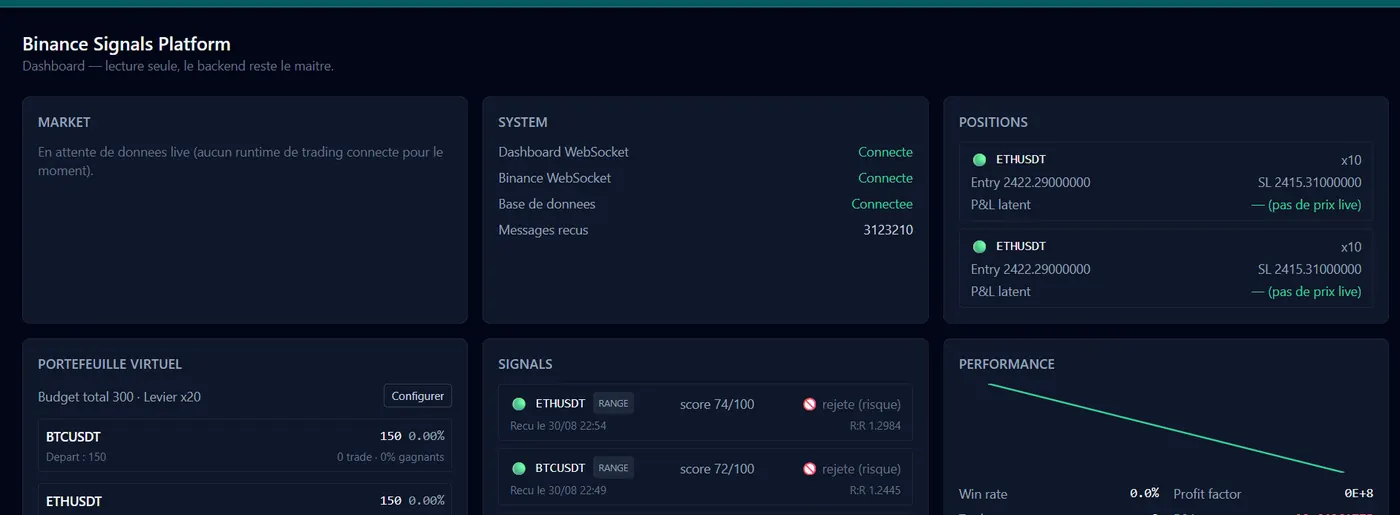
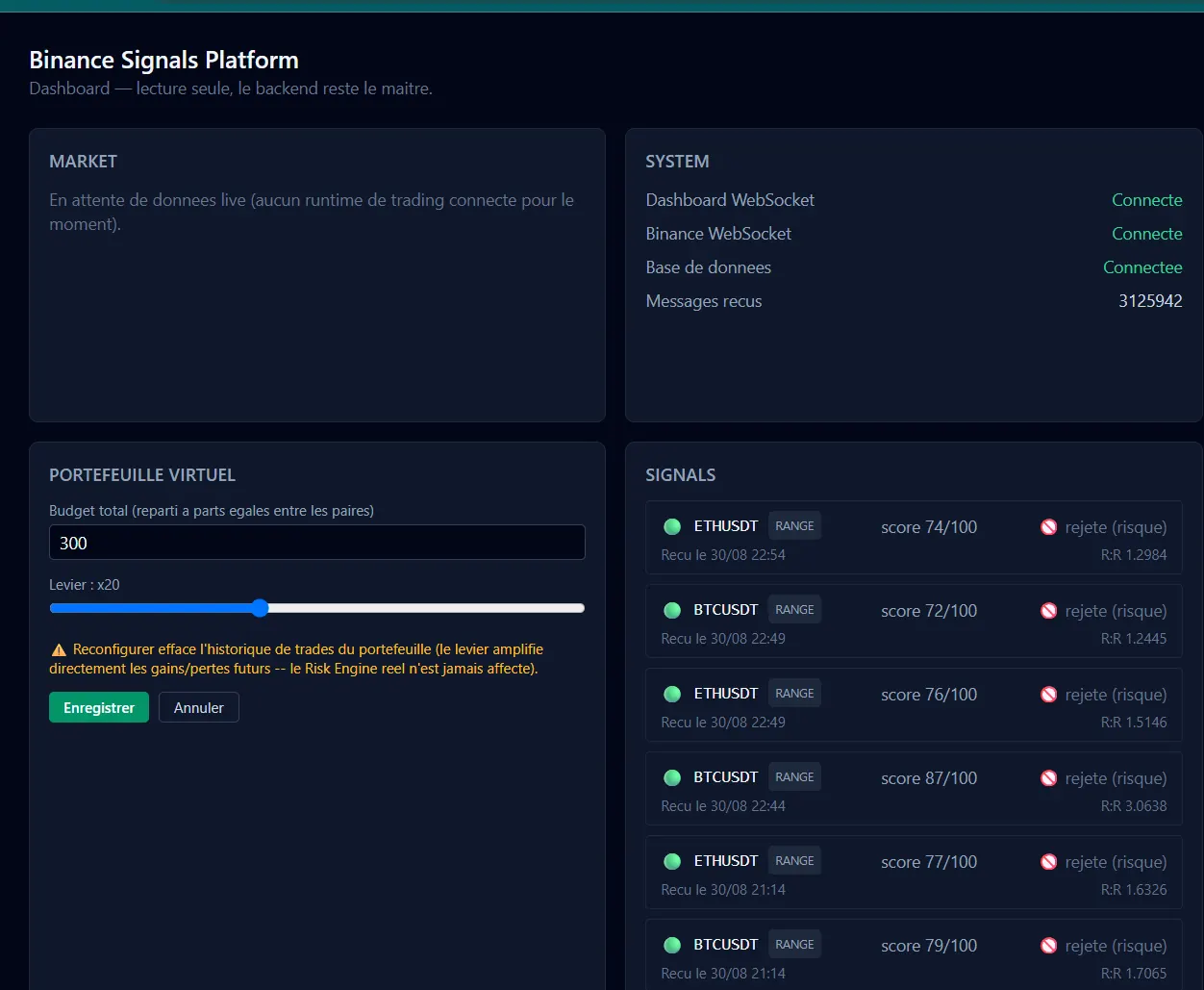
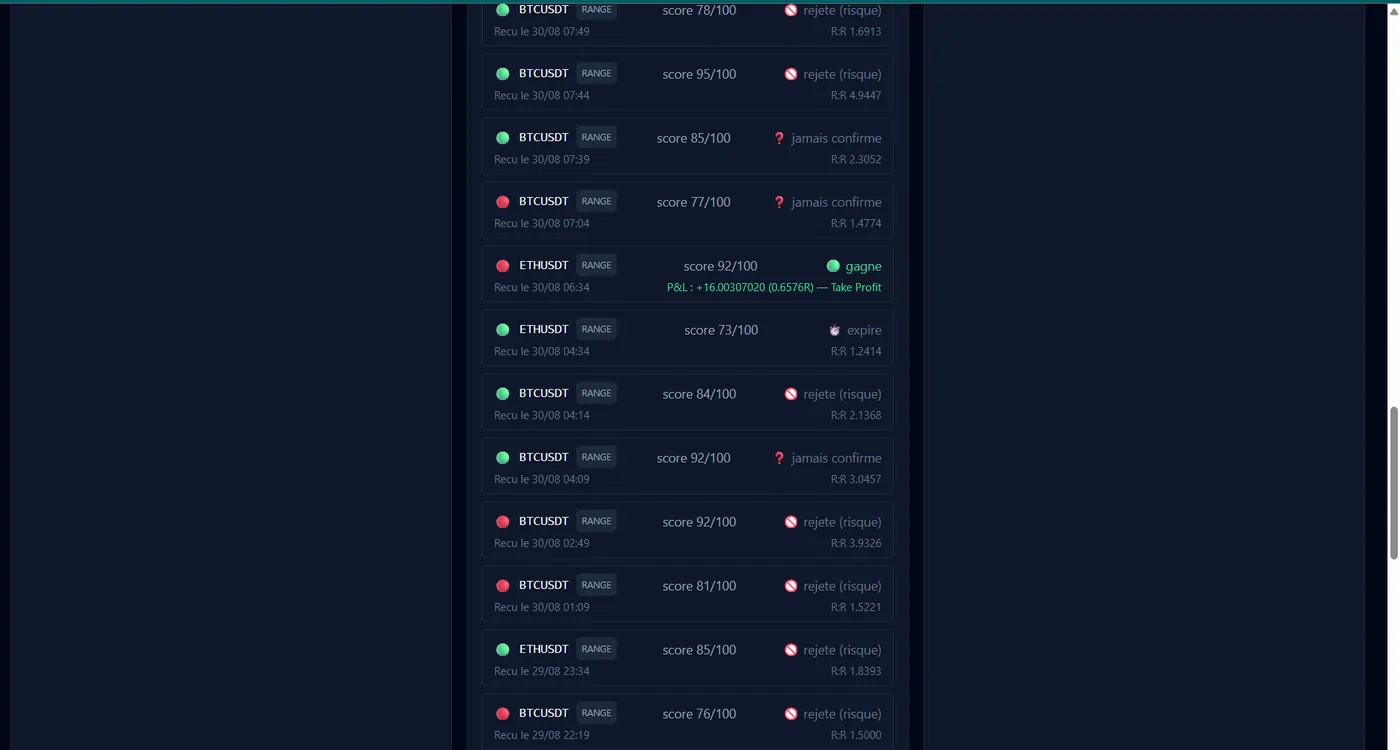
A system that follows Binance Futures markets in real time, analyzes market conditions, generates signals, and supports execution across different levels of automation.
I wanted to build a signal system that treats risk management with the same rigor as opportunity detection, while remaining operational when one of its components encounters a failure.
I built a real-time data pipeline based on WebSocket, an analysis engine that evaluates multiple market factors, and a shared risk engine used across different execution modes: simulation, manual confirmation, and live execution.
I designed and built the entire system: data ingestion, analysis and signal-generation logic, risk management, execution modes, Telegram bot, and monitoring.
- Real-time market data via WebSocket
- Multi-factor analysis with market-regime detection
- Volatility-based stop-loss and take-profit levels
- Three execution modes sharing the same risk engine
- Manual confirmation through Telegram
- Walk-forward backtesting without temporal leakage
- Latency tracking and structured logging
- Automatic masking of sensitive information in logs
I developed and tested each part separately — data, signals, risk, then execution — before running the complete system in simulation and later using it with limited amounts.
The project currently has an automated test suite covering the main components of the system. Failure scenarios and periods of high market volatility have also been used to test its behavior under degraded conditions.